
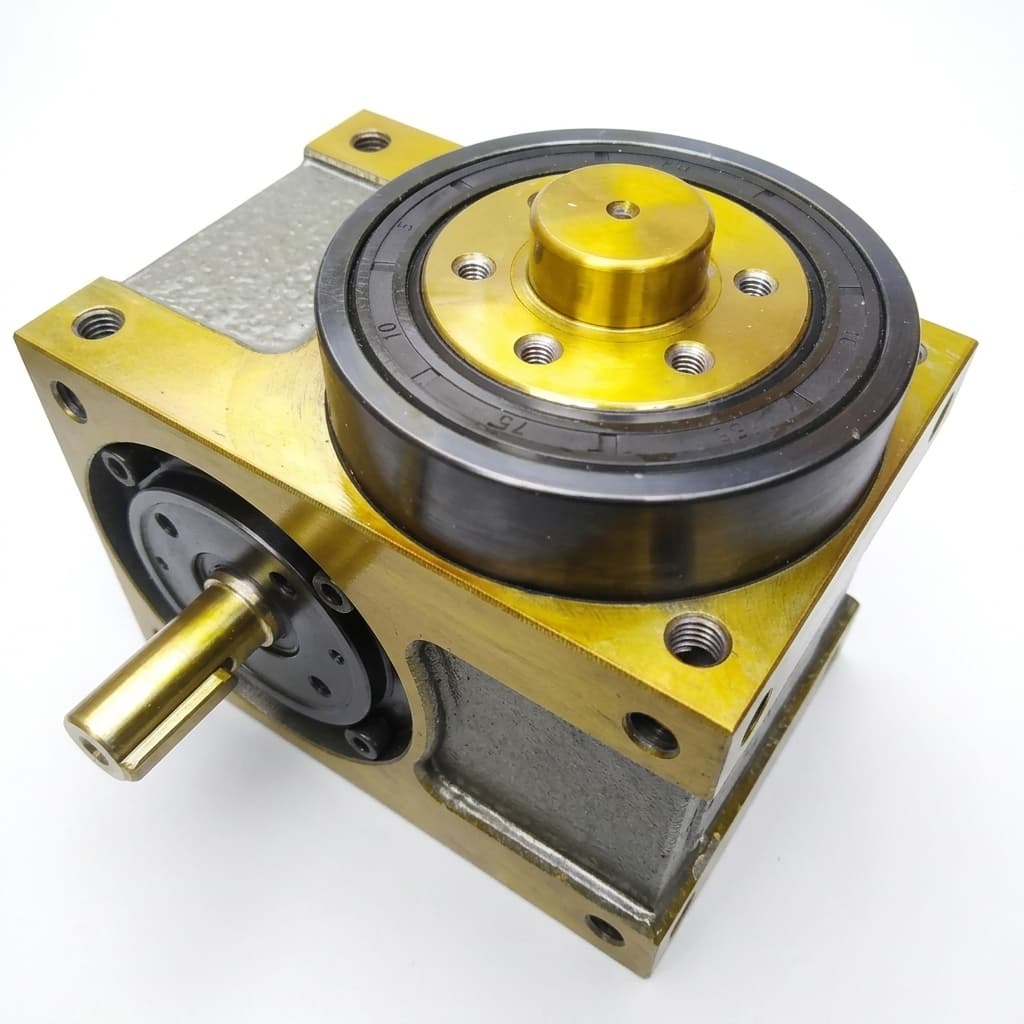
OEM Sample Validation Plan for Rotary Indexers
A sample-stage validation plan linking engineering checks, evidence standards, and procurement sign-off for rotary indexing programs.
In real projects, a sample is only truly "passed" when performance, traceability, and production readiness pass together.
Sample approval is where many OEM programs lose control. Teams verify movement, but fail to lock evidence standards for mass production.
This article lays out a validation framework that procurement and engineering can sign together without ambiguity.
Applicability, Date, and Limits
- Last verified date: 2026-05-11.
- Applies to: new introduction, supplier-switch, and cost-down redesign projects for rotary indexing assemblies.
- Does not replace: regulatory safety certification or customer-specific legal quality agreements.
- Decision boundary: this plan governs sample evidence and release discipline; it is not a substitute for product design responsibility.
Validation Objective and Scope
Use this plan for:
- new rotary indexing platform introduction,
- supplier switch for existing equipment,
- cost-down redesign with unchanged process tolerance.
Primary objective: confirm that sample behavior can be reproduced at production scale.
Three-Gate Validation Architecture
Gate 1: Mechanical and Interface Fit
Goal: confirm installation compatibility before performance tests.
| Checkpoint | Method | Evidence output |
|---|---|---|
| Envelope and interference | Install sample in real fixture or digital twin with controlled dimensions | Fit report with drawing revision and issue log |
| Bolt pattern and pilot fit | Datum-based dimensional inspection | Inspection record with measured vs nominal values |
| Through-bore and cable path | Dynamic movement check through full stroke | Clearance verification sheet |
| Coupling and fastener stack | Assembly sequence check with torque spec | Assembly checklist and torque log |
Gate-1 release rule: all critical fit items closed, no open red-tag issue.
Gate 2: Motion and Precision Performance
Goal: verify repeatability and dynamic behavior under representative duty.
| Checkpoint | Recommended method | Evidence output |
|---|---|---|
| Bidirectional repeatability | CW/CCW cycle test with at least 30 repeats after warm-up | Repeatability report with max/min/mean/P95 |
| Backlash behavior | Controlled reversal test under defined preload | Backlash data sheet and trend chart |
| Settling and stability | Index-and-hold profile under real cycle | Settling time and oscillation observations |
| Thermal drift | Continuous duty run then re-measure key points | Drift report with ambient and run profile |
Gate-2 release rule: all metrics within pre-approved tolerance budget, no unexplained outlier.
Gate 3: Production and Delivery Readiness
Goal: verify the supplier can consistently reproduce approved performance.
| Checkpoint | Method | Evidence output |
|---|---|---|
| Process control points | Review incoming, in-process, and final QC flow | Control plan and checkpoint map |
| Traceability structure | Confirm serial/lot rules and record retention | Traceability template and sample records |
| Packaging and transit protection | Simulated shipping readiness check | Packing standard and transit risk note |
| Change control discipline | Verify ECN and substitution approval workflow | Change-control procedure acknowledgment |
Gate-3 release rule: quality dossier complete and accepted by buyer quality owner.
Sample Quantity and Test Intensity (Practical Baseline)
You can start with this baseline and adjust by project risk:
- Engineering fit sample: 1 set for integration fit and interface closure.
- Performance sample: 2-3 sets for repeatability and motion stability.
- Pilot verification lot: 5-10 sets for process consistency signals.
If the application is high-speed or high-load, increase cycle-test intensity before moving to PO.
Pass/Fail Classification for Fast Decisions
Use a shared defect classification to avoid subjective debates.
| Class | Definition | Action |
|---|---|---|
| Critical | Risk to safety, core function, or unrecoverable integration | Immediate fail, rework and retest required |
| Major | Does not meet agreed tolerance or repeatability envelope | Conditional hold, corrective action required |
| Minor | Cosmetic or non-critical documentation issue | Can pass with closure plan and deadline |
A sample can pass only with zero critical issues and no unresolved major issues.
One-Page Validation Sheet Template
Use one unified sheet across all suppliers.
| Gate | Checkpoint | Target | Measured result | Status (Pass/Cond/Fail) | Owner | Evidence link |
|---|---|---|---|---|---|---|
| G1 | Interface fit | [value] | [value] | [status] | Mech Eng | [doc] |
| G2 | Repeatability | [value] | [value] | [status] | Controls | [doc] |
| G2 | Backlash | [value] | [value] | [status] | Controls | [doc] |
| G3 | Traceability | [rule] | [result] | [status] | Quality | [doc] |
When all suppliers use this same structure, commercial comparison and release decisions become much faster.
Handoff Rule: Sample Pass to Production PO
Do not release production PO until all conditions are met:
- Gate 1, 2, and 3 signed by responsible owners.
- Numeric acceptance limits and measured results archived.
- Supplier change-control agreement signed.
- Open issues list is empty or contains only approved minor items.
This rule prevents the common failure mode: "sample looked good, batch behavior changed later."
Escalation Workflow When a Gate Fails
If any gate fails:
- freeze commercial commitment,
- issue corrective action request with due date,
- retest only affected checkpoints and linked risks,
- record disposition in revision-controlled tracker.
Skipping this loop usually creates hidden cost later in commissioning or field service.
If you need a ready-to-use validation sheet for your project type, request one at [email protected] with your application and annual volume range.
Sources
- ISO 230-2:2014 - Determination of accuracy and repeatability of positioning of numerically controlled axes (ISO)
- ISO 9001:2015 - Quality management systems — Requirements (ISO)
- ISO 10012:2026 - Requirements for measurement management systems (ISO)
- Evaluation of Measurement Data - Guide to the Expression of Uncertainty in Measurement (JCGM)
Author

Categories
More Posts

2026-W20 Rotary Sourcing Update: Tariff Risks
Week-20 buyer brief on servo hollow rotary tables: U.S./EU trade-rule shifts, bore/load exposure points, and RFQ controls buyer teams must lock this week.
Arc-min vs. Arc-sec in Servo Rotary Actuators: A Backlash Procurement Guide
Compare arc-min vs. arc-sec backlash in servo rotary actuators, calculate radius error, and request the right precision spec before you issue the RFQ.

2026-W25 Servo Rotary Sourcing: New Compliance Gates & Sizing Safeguards
Week-25 buyer brief for servo hollow rotary tables: EU 12-month sanction extension, USTR forced labor duty proposals, pneumatic air compressor anti-dumping risk, and bore/load sizing rules.